 24th October 2026 | By Admin
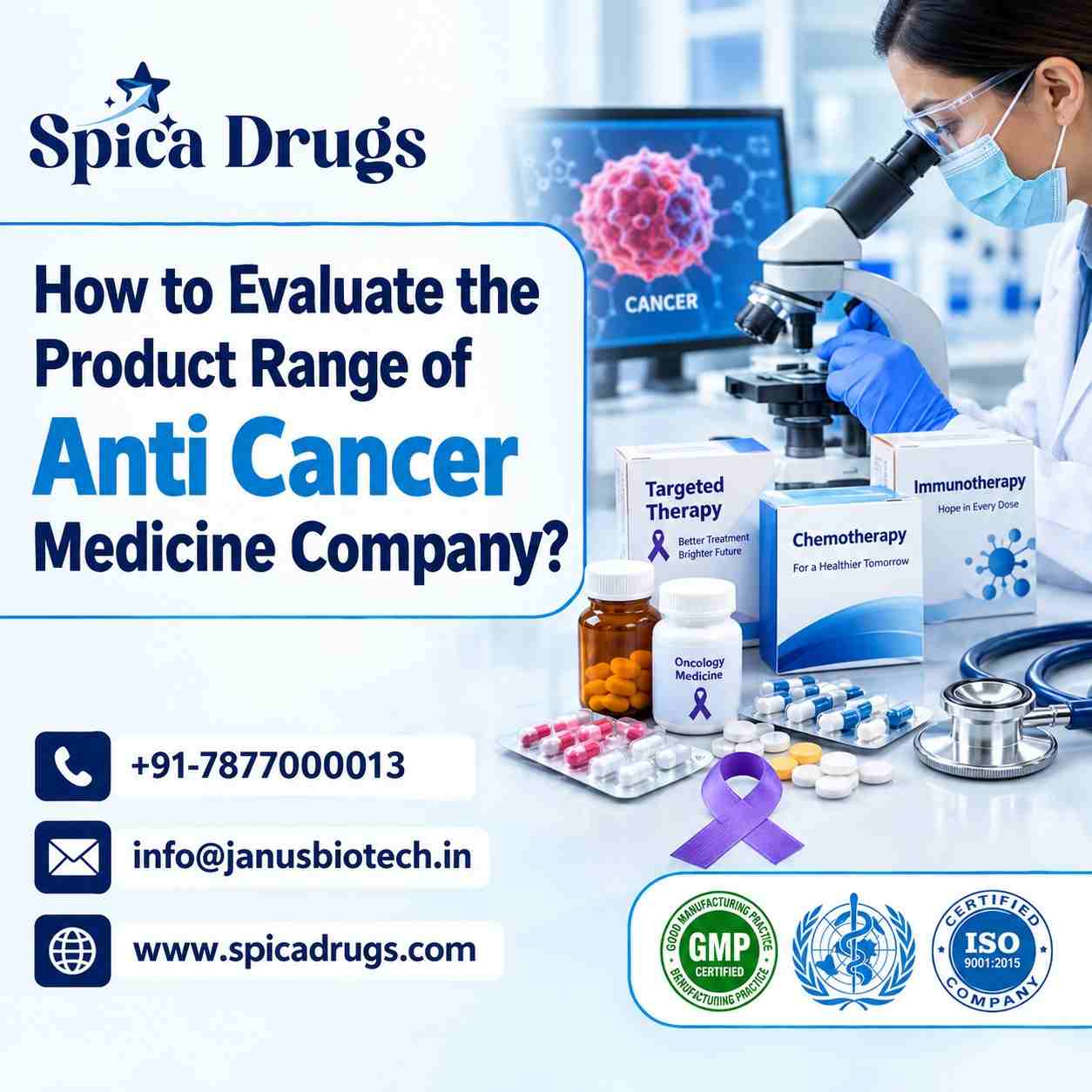
Selecting an ideal Anti Cancer Medicine Company is one of the most important tasks for a pharmaceutical businessman. It is the variety of products that determines the number of physicians you can work with, the number of therapy areas covered by your company and the stability of revenue flows in the long run.
A reliable Anti Cancer Medicine Company offers tablets, injections and supportive medicines that match real prescriptions. In this blog, you will learn simple ways to check the product list of any Anti Cancer Medicine Company before you sign an agreement.
Whether you plan to join an Oncology Pharma Company, an Oncology Pharmaceutical Company, or an Oncology PCD Company, the checks are much the same. These steps also work for any Pharma Oncology brand and any Oncology Pharma Franchise offer.
What Does Oncology Pharma Mean for Product Range?
Oncology Pharma comprises medicines for cancer treatment as well as supportive care medicines which are used to alleviate side effects of chemotherapy. Evaluation of an Anti Cancer Medicine Company consists in assessment of how well its portfolio of Oncology Pharma products corresponds to what oncologists prescribe. Ideally, it should be extensive, balanced and frequently renewed.
- Cancer Type Coverage: Look at whether the range covers common cancers such as breast, lung, colon and blood cancer. Oncology Pharma is a wide field, so a company with only two or three products cannot serve many doctors. Wider coverage means more prescriptions for you.
- Dosage Form: See whether the portfolio includes tablets, capsules and injections. Patients require injections in hospitals but some can take tablets on their own. Diversified portfolio will enable you to market the range of Oncology Pharma to clinics and chemist shops without any gaps.
- Supportive Care Medicines: Cancer treatment causes nausea, pain and reduction in blood count. An ideal Anti Cancer Medicine Company will have supportive care medicines as well. Such medicines sell regularly and assist doctors in treating the whole patient and not just the tumor.
- Generic vs. Branded Products: Find out which medicines are generics and which are premium branded products. Generics help to reduce costs for your patients, whereas high-quality branded products can earn their trust. For Pharma Oncology buyers, a combination of generics and branded products will provide better price options.
- Strength Options: Each patient needs a different dose of medicine. Find out if there are different strengths for each molecule. It is clear that companies offering different strengths know what they are doing in Oncology Pharma.
Why Does an Oncology Pharma Company Need a Wide Portfolio?
The Oncology Pharma Company relying on some few products may be at a disadvantage when the demand pattern changes. Having a wide range ensures that both the suppliers and the company partners benefit from the constant flow of supply. That is why having a wide range is important just like having a variety.
- Steady Sales: When one product slows down, another covers the gap. An Oncology Pharma Company with many molecules keeps your monthly turnover stable. This helps new businesses that cannot handle long dry spells.
- Doctor Trust: Oncologists prefer suppliers who can fill most of their prescription list. A full range makes you their first call. A strong Anti Cancer Medicine Company earns this trust through steady supply and honest dealing.
- Stock Planning: An Oncology Pharma Company with a wide list helps you plan stock by season and hospital demand. You can keep fast items ready and order slow ones in small lots. Your money then does not get stuck in unsold stock.
- New Launches: Find out how frequently the company launches new compounds. Continuous launches indicate strength in research and development and planning for the future. A static list indicates that the company is no longer growing.
- Market Reach: Wider spectrum would enable you to target private hospitals, cancer institutes, government tenders. Each channel has its own requisites. In addition, there is growing demand for Pharma Oncology in smaller cities as well; hence, having a wide spectrum of names would be helpful.
How to Check an Oncology Pharmaceutical Company’s Quality Standards?
Product range means little if quality is weak. An Oncology Pharmaceutical Company must follow strict rules because cancer medicines are sensitive and can be risky. Always verify these points before you trust any product list.
- License & Certificate: Inquire about the manufacturing license, GMP certificate and WHO-GMP certification. A real oncology pharmaceutical company will not hide these documents from its customers. Any hesitation in providing them must be seen as a red flag.
- Dedicated Facility: Specialized medicines like cancer medicines require dedicated production facilities. Make sure that the facility has a dedicated unit for manufacturing cytotoxic medicines. It is one way of knowing that the Oncology Pharmaceutical Company cares about safety.
- Test Reports: Inquire about the batch test reports and stability information. A reputable Oncology Pharmaceutical Company will have test reports for each batch of medicines. Testing reports will prove that the medicine is indeed what it claims to be.
- Raw Material Source: Know the sources of raw material used by the company. Proper raw material sourcing will maintain consistency from batch to batch. A reputable Anti-Cancer Medicine Company will never face any problem due to poor quality.
- Package and Storage: Many anti-cancer medicines require cold packaging or specific conditions for storage. Look for labels and cartons, as well as cold chain transportation. A proper Oncology Pharmaceutical Company packages all its products in such a way that they remain safe through long distances.
Pharma Oncology Product Range and Therapy Coverage
A strong Pharma Oncology range should cover the main treatment methods, not only one type. Look at chemotherapy, targeted therapy, hormone therapy and supportive care together. This tells you if the company can meet full treatment needs.
- Chemotherapy Drugs: These are the core of cancer care. Check for common molecules like paclitaxel, gemcitabine and capecitabine. A good Pharma Oncology list will hold many of them at fair prices.
- Targeted Therapy: These newer medicines act on specific cancer cells. They cost more but are in high demand. If an Oncology Pharma Company offers them, it shows a modern approach to treatment.
- Hormone Therapy: Breast and prostate cancer often need hormone-based medicines. Make sure the range includes them. Missing these means you lose a large group of patients in Oncology Pharma.
- Injectables and Infusions: Hospitals use many injectable medicines in daily cycles. Check vial sizes and shelf life. A solid Pharma Oncology portfolio always has a good injectable section.
- Price Fairness: Compare rates with other suppliers. Fair prices help patients afford long treatment. A fairly priced Anti Cancer Medicine Company wins repeat orders from hospitals and chemists.
How Does an Oncology PCD Company Support Partners?
An Oncology PCD Company gives you the right to market its products in your area, so its support decides how fast you grow. Product range is only half the picture. Partner help is the other half.
- Territory Rights: Ask if your area is exclusive. Good Oncology PCD Company terms stop other partners from selling the same brand near you. This protects your effort and your income.
- Marketing Material: Check for visual aids, brochures, samples and doctor literature. Cancer specialists want detailed information. A helpful Oncology PCD Company provides these tools without extra cost.
- Training Help: Selling cancer medicines needs good knowledge. See if the company trains your team on molecules and uses. Pharma Oncology topics can be hard and training builds confidence when you meet oncologists.
- Supply Speed: Timely delivery matters because cancer patients cannot wait. Ask about dispatch time and cold-chain delivery. A trusted Oncology PCD Company keeps its promises on supply.
- Low Minimum Order: New businesses need small starting orders. Check if the company allows this before you join an Oncology Pharma Franchise. Flexible terms help you grow safely.
Oncology Pharma Franchise Terms and Support
An Oncology Pharma Franchise is a long-term business tie, so read every term carefully. Clear terms avoid disputes later and let both sides work in peace.
- Agreement Clarity: Read the full contract, including duration, renewal and exit rules. A fair Oncology Pharma Franchise puts everything in writing. Never accept only verbal promises.
- Monthly Targets: Some companies set very high targets. Check if they are realistic for your area. A good Oncology Pharma Franchise gives goals that you can actually reach.
- Promotional Support: Ask about conference support, health camps and doctor meets. This help builds your name in the market. An Anti Cancer Medicine Company that invests in partners earns long-term loyalty.
- Return Policy: Review whether any process of stock that has expired or damage is in place. The policy saves money. The trustable Oncology PCD Company talks about this before anything else happens.
- Company reputation: You can talk with current clients and even see the manufacturing plant of the company. It will give you true information about how they act in the Oncology PCD Company network.
Conclusion
Evaluating the product range of an Anti Cancer Medicine Company takes patience, but it protects your business. Check Oncology Pharma coverage, quality, Pharma Oncology variety, Oncology PCD Company support and Oncology Pharma Franchise terms. Every Oncology Pharmaceutical Company and Oncology Pharma Company should pass these checks.
You May Also Explore: